Cybersecurity Expert Witness Services
Law & Forensics provides defensible cybersecurity expert witness testimony for complex litigation, pairing deep digital forensics expertise with the ability to translate technical concepts clearly for judges and juries.
Cybersecurity Expert Witness Services, in plain terms
A cybersecurity expert witness gives a court, arbitrator or regulator an independent opinion on the technical facts of a security incident and on whether an organization's controls met the standard of care that applied at the time. Law & Forensics provides that expert from a bench that has both investigated intrusions and run enterprise security programs. The deliverables are an expert report under Rule 26(a)(2)(B), declarations in support of motions, deposition testimony, testimony at hearing or trial, and rebuttal of an opposing expert's report.
The service is for litigators, in-house counsel, insurers and their clients in data-breach class actions, negligence and standard-of-care claims, coverage disputes that turn on the classification or timing of a cyber event, software and technology contract disputes, unauthorized-access and computer-fraud claims, and regulatory or criminal matters in which technical conduct is in issue. Because those questions are decided on evidence, the opinion begins with digital forensics: the intrusion path, dwell time and exfiltration record reconstructed from logs and forensic images, then measured against recognized frameworks rather than asserted from them.
The reasonableness question is answered against contemporaneous practice — what a comparable organization did at the time, not what is obvious after the incident — and our experts can speak to it as former chief security officers and regulators who built and supervised those programs, as well as examiners who can walk the artifacts. The Daubert standard is applied to each of those opinions, and we document the work on the assumption that it will be.
Cybersecurity Expert Witness Services capabilities
Cybersecurity Incident Analysis
Our expert witnesses analyze security incidents to identify root cause and determine the extent of damage. We work alongside legal teams to provide clear, defensible explanations of technical concepts that establish a solid evidentiary foundation.
Best Practices & Compliance Assessment
With extensive knowledge of industry best practices, regulatory requirements, and compliance frameworks, we assess an organization's cybersecurity posture and provide testimony that validates or refutes negligence claims.
Digital Forensics Investigation
Our digital forensics experts conduct comprehensive investigations to uncover the evidence that supports or refutes claims in cybersecurity litigation, with rigorous attention to accuracy and defensibility.
Expert Testimony & Communication
Our experts are skilled communicators who explain complex technical concepts clearly and concisely, developing compelling testimony that helps fact-finders understand the technical aspects of a case.
Cybersecurity Expert Witness Services — what the engagement looks like
Conflicts check and scoping
We run conflicts, then define with counsel the questions to be answered — causation, scope, standard of care, coverage classification — the materials in scope (incident reports, response-vendor findings, logs, images, policies and audits), and whether the role is consulting or testifying.
Assembling the evidentiary record
We identify what the incident actually left behind — endpoint and network telemetry, authentication and access logs, forensic images taken during the response, vendor reports — and preserve what has not yet been preserved, with hash verification and a documented chain of custody, so the opinion rests on a record that can be produced.
Technical reconstruction
The intrusion is reconstructed from the artifacts: initial access, lateral movement, privilege escalation, persistence, what was reached and what was taken. Where causation is contested rather than the breach itself, this reconstruction is what separates demonstrated harm from assumed harm.
Standard-of-care analysis
The security program is measured against the recognized frameworks and regulatory expectations applicable at the time, with attention to whether any departure actually mattered to the incident. Citing a standard is not the same as showing a material departure from it, and that gap is where most opposing reports fail.
Report, deposition and trial
Findings are written as a Rule 26(a)(2)(B) report or a declaration, each opinion traceable to the evidence it rests on and its limits stated plainly. The expert who did the analysis testifies to it at deposition, at any Daubert hearing, and at trial.
Cybersecurity Expert Witness Services — matters we are engaged for
The dispute is whether the security was reasonable
Not whether an incident occurred, but whether the controls in place met the standard applicable at the time. That is a question about contemporaneous practice, and it has to be answered against what was reasonable then rather than what is obvious now.
Causation is contested, not the breach
The intrusion is admitted and the argument is about what it caused. Tracing the attacker's actual access path, and what it did and did not reach, is what separates demonstrated harm from assumed harm.
An insurer disputes coverage on technical grounds
Coverage frequently turns on the classification of an event, the timing of discovery, or whether a control the policy required was actually in place. Each of those is an evidentiary question before it is a contractual one.
The opposing expert relies on frameworks rather than facts
Citing a standard is not the same as showing the organisation departed from it in a way that mattered. The rebuttal is usually about the gap between the framework cited and the evidence offered.
How our testimony holds up
Federal Rule of Evidence 702 requires that an expert's opinion rest on sufficient facts or data, be the product of reliable principles and methods, and reflect a reliable application of those methods to the facts — and since the December 2023 amendment, that the proponent demonstrate each of those by a preponderance of the evidence. Daubert v. Merrell Dow made the trial judge the gatekeeper of that reliability; Kumho Tire v. Carmichael extended the gate to technical and other specialized knowledge, which is exactly where an opinion about security controls sits. A cybersecurity opinion is most often excluded not for a flawed tool but for an inferential leap — a conclusion about negligence or causation the underlying artifacts cannot carry.
We build every opinion to close that gap: the technical facts are established from the forensic record first, the standard is identified as it stood at the time, and the departure — if there is one — is shown to have mattered. Where the other side's expert relies on frameworks rather than facts, our Daubert challenge defense work documents the difference for the motion or the cross-examination.
The record shows how this holds. In a connected-device class action, the court admitted our cybersecurity expert's testimony over a Daubert challenge and excluded key portions of the opposing expert's opinions. In a multi-state data-breach class action, expert testimony on reasonable security controls contributed to early dismissal of the data-mismanagement claim. And in United States v. Joseph Sullivan, the federal prosecution of Uber's former chief security officer, a Law & Forensics principal served as the cybersecurity expert. Every appointment and testifying role is listed by matter and citation.
The bench behind the testimony
Law & Forensics is a bench of seven named experts, and cybersecurity matters draw on the ones who have run the programs they are asked to evaluate. Roland Cloutier was Global Chief Security Officer of ByteDance and TikTok, and of two other major enterprises before that, and has served as an expert consultant in more than twenty disputes. David Cass was a lead regulator at the Federal Reserve Bank of New York and, before that, chief information security officer at IBM's cloud security practice and at Elsevier; his most recent testifying engagement concerned a cyber-attack on a regional credit union. Daniel B. Garrie, the firm's founder, testifies as a cybersecurity and digital forensics expert in state and federal court. Gary Corn, former General Counsel to U.S. Cyber Command, was the expert in the Mondelez v. Zurich and Merck v. ACE American NotPetya coverage disputes over whether a nation-state cyberattack is an act of war. George Pierce established a multinational's first cybersecurity program as its chief legal officer, and J-Michael Roberts reconstructs intrusions as a forensic examiner and former head of incident response. See the full expert panel.
Before litigation: the fixed-fee front door
Where an incident has occurred and litigation is anticipated but not filed, the Evidence Readiness Assessment is the fixed-fee, fixed-scope engagement that maps what evidence of the incident exists, ranks what is at risk of loss, and states candidly whether it can be preserved and authenticated — before response-vendor logs age out and before an ESI protocol binds a party to produce from systems it cannot defensibly collect from. Where the question is instead whether the program would withstand scrutiny before any incident, the independent cybersecurity audit is the attestable review built for that.
Cybersecurity Expert Witness Services — frequently asked questions
What cybersecurity expert witness services do you provide?
Our services span cybersecurity incident analysis, best practices and compliance assessment, digital forensics investigation, and expert testimony. We support litigation from initial analysis through testimony at trial.
How do you support a negligence or compliance dispute?
We evaluate an organization's cybersecurity policies and procedures against industry standards and regulatory requirements, then provide expert testimony that validates or refutes claims of negligence or non-compliance.
Can your experts explain technical evidence to a jury?
Yes. Our expert witnesses are skilled communicators who translate complex technical evidence into clear, concise explanations, working closely with legal teams to develop testimony that fact-finders can readily understand.
What types of cases do you handle?
We advise on both large and small matters, including data breach litigation, regulatory compliance disputes, intellectual property and unauthorized-access claims, and high-profile cybercrime cases requiring expert testimony.
Cybersecurity Expert Witness Services — questions, terms and comparisons
Questions answered
Cybersecurity experts who testify to this work
Full expert panel →
Roland Cloutier
Expert Consultant
Board-Level Consulting · Enterprise & Corporate Security · Risk Management
Daniel B. Garrie
Founder
Board-Level Consulting · Cybersecurity Audits & Assessments · Incident Response
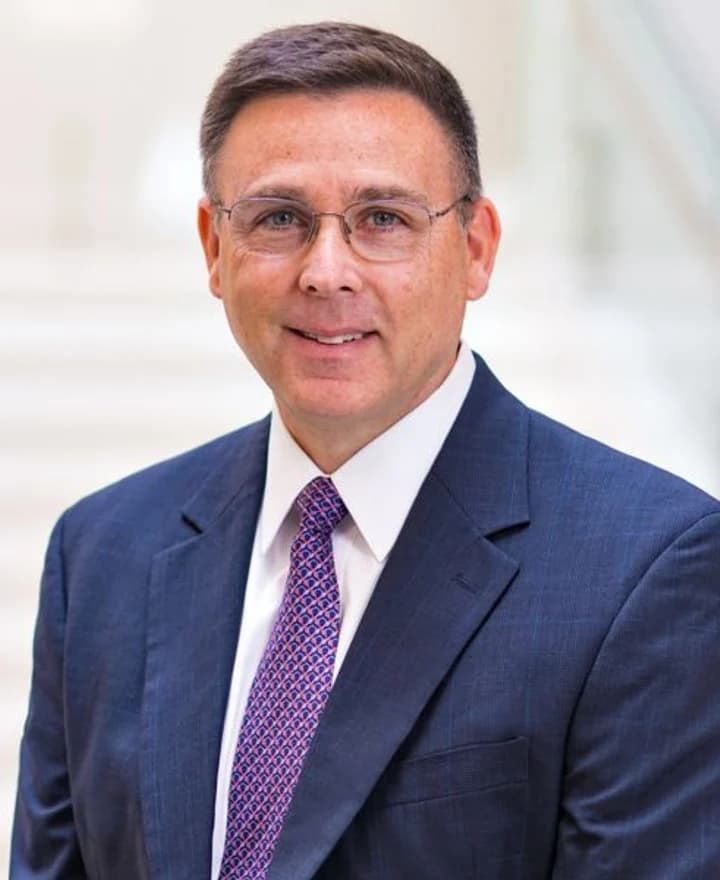
Gary Corn
Director, Technology, Law & Security, American University
Cyber Warfare Consulting · Cyber Warfare Training · National Security Law
Our experts serve as court-appointed special masters, forensic neutrals, and arbitrators — 40 appointments are listed by matter and citation.
Cybersecurity Expert Witness Services case results
Technology / Ride-Sharing
Cybersecurity Expert in United States v. Joseph Sullivan — the Uber CSO Prosecution
Expert Testimony
Surviving Daubert as the cybersecurity expert in a connected-device class action
Energy & Utilities / Critical Infrastructure
Nation-State OT Intrusion Contained at a Major Regional Electric Utility